Figuring It Out
Learning to solve problems
Stuck zippers! Snatched toys! Spilled milk! Learning to be a good problem-solver helps children be independent and feel more comfortable trying new things. It also helps them enjoy playing with others.
- Audience
- Caregiver
- Subject
- Social-Emotional Learning
- Age
- KindergartenPre-KPreschoolToddler
- Languages
- ArabicBrazilian PortugueseCape VerdeanEnglishFrenchHaitian CreoleRussianSimplified ChineseSpanishVietnamese
- Materials
- Puppets, blocks
The Basics
Problems come in all shapes and sizes. A young child might not be able to reach the sink or might want a turn on the slide. Sometimes these problems come with big feelings. Problem-solving starts early. Babies learn by testing things out again and again. So do young children! Problem-solving involves creativity and a willingness to keep trying. With practice, children can become really good at solving their own challenges.
Getting Started
The very best way for young children to become good problem-solvers is through play. Play gives children time to try things out and make their own choices. Sometimes children need help when things get challenging. Work together to come up with lots of possible ways to solve the problem. Let your child choose one solution to try. Sometimes their choice might work, other times
it might not. Help them learn from their mistakes. “How else could you try that?”
Things to Try with Ages 2 to 5
Search everywhere
- Invite your child to play hide-and-seek. Take turns “hiding” and “seeking”. There is problem-solving in finding places to hide and in figuring out where someone else is.
- Play hide-and-seek with puppets. Show your child two puppets. Then hide each puppet in a different spot. Give your child one hint at a time. “Cow is somewhere warm and cozy.” “Cow is having a nap.” “You found it! Cow was under the blanket!”
Building challenges
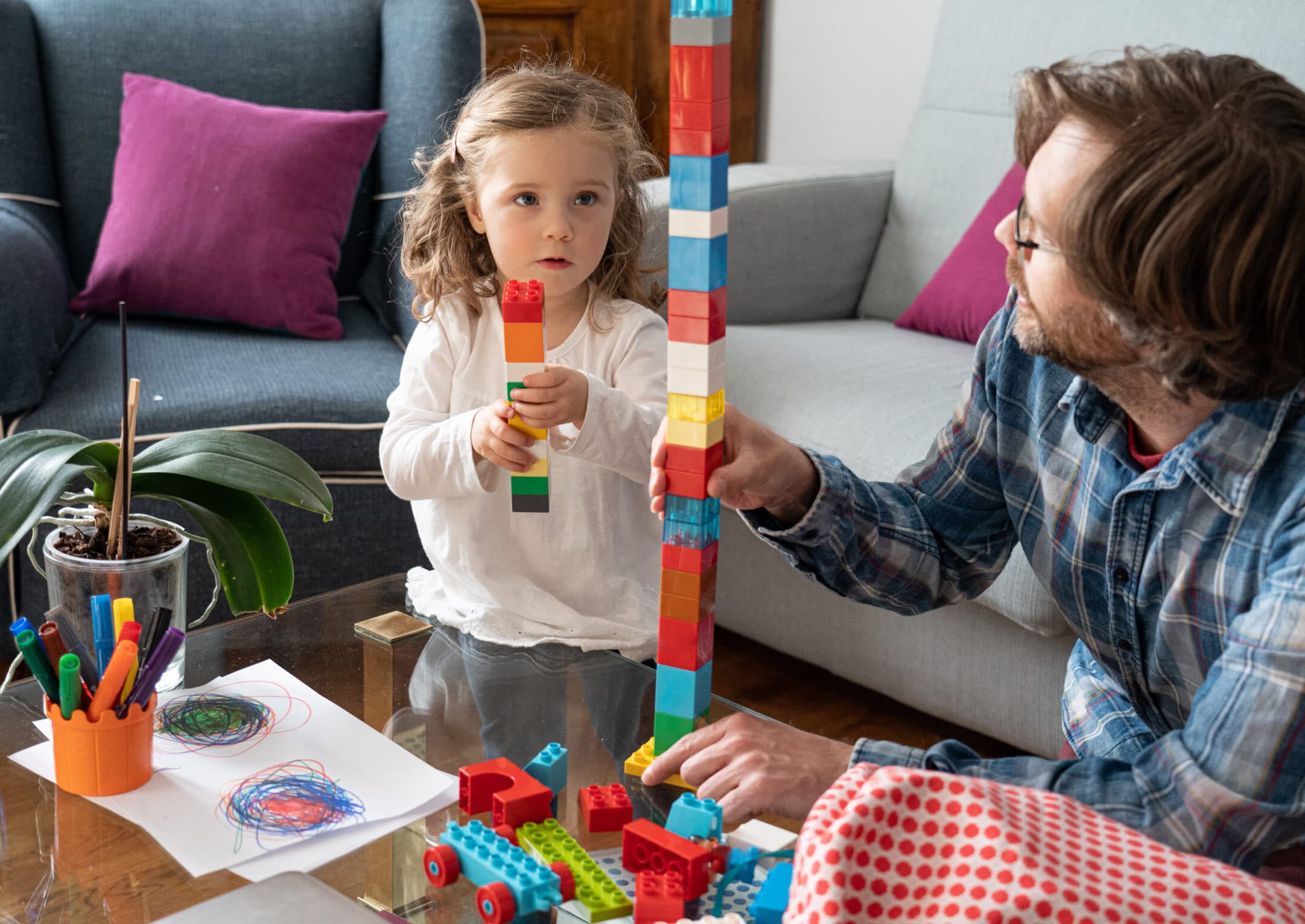
- Challenge your child to use the blocks to build a tower on their own. Each time the tower falls, ask, “What could you try differently next time?” Let them try and try again.
- Mix it up! Add other building materials to the blocks from your recycling bin. Challenge your child to build a tower using the blocks, yogurt cups, toilet paper tubes, and whatever else you have. This is harder because the materials might not all fit together easily.
- Challenge your child to use the blocks to build a home for a puppet. What happens if it rains? Try adding other building materials to make a roof.
- Try more building challenges with blocks and things from your recycling bin. Build a home big enough for more than one puppet. Build a way for the puppet to get across a road. Build something big enough for your child and the puppet to fit inside together. (You might need to add some pillows and blankets!)
Everyday Interactions
Use mealtime spills to practice problem-solving. “I see you spilled your milk. Accidents happen. What can you use to help clean it up?”
When reading a book, point out problem-solving. Ask your child what the problem was and how it got solved. Do they have other ideas for how they might have solved the problem themselves?
Model, Notice, Practice
“I can’t get this bag open. I could use scissors. What else could I try?”
“You chose to play with the other truck instead of taking hers. That was very nice of you. ”
“I can see that's not quite working. What else could you try? ”
Related Resources
 CaregiverActivity
My Turn, Your Turn
Taking turns is an important part of playing and working together, but it is not easy. Children need a lot of practice and help from adults to learn to do it well.
 CaregiverActivity
Listen, Think, and Do
“Please wait.” “Eat your spaghetti with your fork.” “Give your friend a turn.” Learning the skills to follow directions helps children learn to behave nicely with others.
 CaregiverActivity
More Than Me
“I am happy. But you seem sad?” It is hard to imagine how others feel. But it is a skill that children need to play with others and make friends.
 CaregiverActivity
Deep Breaths and Happy Dances
Really happy, really sad, or really mad—feelings can be hard to manage. When a child can manage their feelings, they are able to show their feelings without losing control.
 FeaturedCaregiverActivity
Happy, Sad, Mad
Children experience lots of different feelings. Every feeling has its own name. But each child feels and shows their feelings in different ways.
 CaregiverActivity
Stories Full of Feelings
Books are great tools to support young children’s social-emotional learning. The characters in the stories introduce many different feelings and ways of being a good friend or helper. And many stories also share creative ways of problem-solving.
 EducatorGuide
Me, You, We – Playgroup Guide
Playgroup structure to maximize social-emotional learning during your playgroup.
 CaregiverActivity
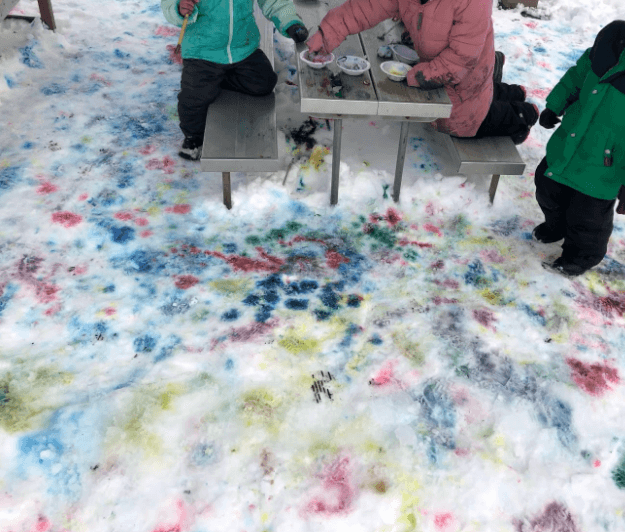
Painting Snow
Children can paint freely across a unique surface and see where their ideas take them. Experiencing textures and temperatures you feel, like the hard ground, cold snow, and frozen, slippery ice.